Showing posts with label krill. Show all posts

Wednesday, 7 January 2015

There’s a Hole in the Ozone Layer, Dear Liza, Dear Liza

A blog about the human impacts on Antarctica would be incomplete without a post or two concerning the hole in the ozone layer. This is perhaps the most well-known human impact on the continent. Furthermore, this blog has so far considered the human impacts on the ground or on the marine environment. The atmospheric effects are also significant. 

The ozone layer lies between the stratosphere and the troposphere. The reason this layer is useful to us is that ozone molecules absorb ultraviolet (UV) radiation from the Sun and therefore protect us from the harmful effects of excessive UV radiation exposure (Martin and Hine, 2014, in ‘A Dictionary of Biology’).

The hole in the ozone layer was discovered by Farman et al. (1985). The authors collected data at the Halley Bay research station from 1957 to 1984 and, by using spectrophotometers, discovered that the ozone layer was depleting in spring (which is from September to November). The cause of ozone depletion was found to be a chemical reaction that occurs between chlorine and bromine atoms, that originate from chlorofluorocarbons, and ozone (Molina and Rowland, 1974). Chlorofluorocarbons (CFCs) were invented in the 1920s and commercially manufactured in the 1930s (The Ozone Hole, 2014). CFCs were used as cleaning solvents, in fire extinguishers, in aerosols and as refrigerants in air conditioning units (Tsai, 2014:883, in ‘Encyclopedia of Toxicology’). They were desirable because they possessed beneficial properties, including the fact that they were nontoxic and non-flammable. 

Molina and Rowland found that the reaction takes place in the presence of UV radiation. According to the NOAA (2008), during the Antarctic winter, ‘stratospheric ice clouds (PSCs, polar stratospheric clouds) form when temperatures drop below -78C. These clouds are responsible for chemical changes that promote production of chemically active chlorine and bromine’. During the winter, there is no sunlight in Antarctica. Thus, when spring arrives and the sun appears, chlorine and bromine molecules react with ozone molecules, causing it to break down. This is what creates a hole in the ozone layer during the spring. The reason why Antarctica in particular is subject to ozone depletion more than, say, the Arctic, is that cold temperatures are required for the reaction (Solomon, 2004). Figure 1 shows the monthly mean total ozone levels at Halley Bay in October, the middle of spring when ozone depletion occurs, from 1957 to 1984. The figure shows spring ozone depletion starting from the mid-1960s. CFCs have caused the ozone layer to deplete by as much as 50% (Smith et al. 1992) not just in spring, but in the winter as well (Rowland, 1986). The human invention of CFCs has therefore been the sole contribution to ozone depletion. 

Figure 1. Monthly mean total ozone levels at Halley Bay in October from 1957 to 1984. Source: Farman et al. (1985)


Effects

Without the protective shield from the ozone layer, more UV radiation reaches the Earth. For humans, greater exposure to UV can have severe health effects, such as increasing the likelihood of developing skin cancer (Norval et al. 2011), damage to DNA (Herrlich et al. 1992) and eye damage (Longstreth et al. 1995).

But I think it would be more relevant to focus on the effects of ozone depletion on species living in Antarctica. For instance, it has been observed that marine phytoplankton and diatoms have experienced DNA damage due to greater UV exposure (Buma et al. 2001). Furthermore, Smith et al. (1992) discovered that, in the Bellingshausen Sea (for a map of its location, see this post), a greater concentration of UV radiation is hindering photosynthesis which in turn is preventing the growth of phytoplankton. These findings illustrate how the marine ecosystem is negatively affected by the hole in the ozone layer. More specifically, phytoplankton is affected negatively. The importance of phytoplankton is illustrated by the food chain from my post from 29 November. Krill and penguins feed on phytoplankton. This shows how ozone depletion affects the food chain and therefore causes a change in the marine ecology of Antarctica. Additionally, this highlights that although ozone depletion happens in the stratosphere, there are indirect terrestrial effects observed as well.


I shall end this post with a short video to summarise the hole in the ozone layer, i.e. the key findings, the mechanism, the treaty…etc. It is presented by Shanklin, who co-discovered the hole in the ozone layer.


Next week, I will explore the subsequent regulation that followed from this discovery and its success at restoring the ozone layer. The updated score is 7-4, negative impacts seem to be taking the lead! 

Friday, 2 January 2015

Images to Display the Main Points So Far

By reading the human impacts on Antarctica, it can be difficult to picture what’s actually going on. In my blog, I have tried to make the posts as visual as I can, because this illustrates the extent of the issues I have discussed. Particularly because Antarctica is remote and relatively uninhabited, I have used maps to show where the places I talk about are.

Having said this, I feel like illustrations need their own post so today, I will be presenting a range of photographs that relate to the main issues I have mentioned so far: tourism, waste, entanglement and krill.


Figure 1.
Clean up operation of an abandoned landfill site at Thala Valley. The site was used from the 1960s to 1980s. An Australian research station dumped approximately 1,000 tonnes of soil here, which contains remains of used batteries and machinery. Source: Royal Society of Chemistry (2007)


Figure 2.


Figure 3.
Researcher carefully taking a sample from a contaminated site. Source: Australian government: Department of the Environment, Antarctic Division (2012)


Figure 4.
Tourists enjoying the company of an Emperor penguin chick. Source: Wikipedia (2009)


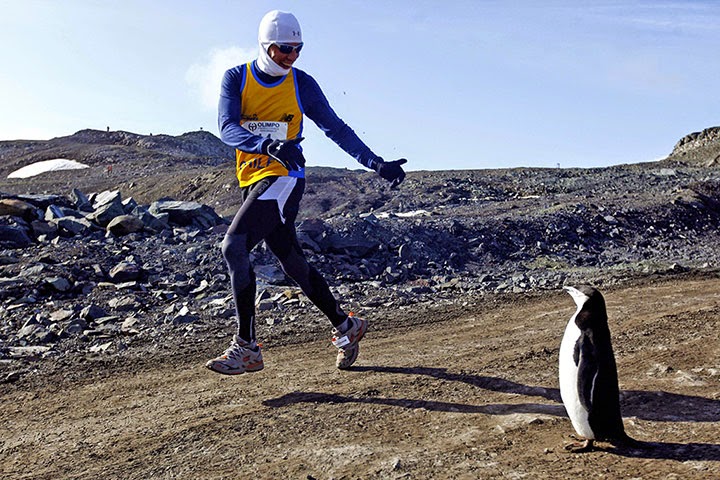
Figure 5
Runner from the Antarctic Marathon smiling at a penguin. Source: B Positive Project (2013)


Figure 6.


Figure 7.


Figure 8.
350 foreign officials attend an Annual Antarctic Treaty Conference in Uruguay in 2010. Main discussions included tourism, climate change and sovereignty. Source: Merco Press (2010)


Before I end this post, I'd like to recommend a couple of blogs and websites that have a good selection of photos that I would encourage my readers to take a look at. Firstly, Flickr's Antarctica page has a great range of pictures taken by tourist, and can be accessed by clicking here. Secondly, I came across a website called Wild Nature Images which has many photographs posted on their website, and can be accessed by clicking here

Tuesday, 23 December 2014

Pause for Thought

Since I started this blog three months ago, I have covered a wide range of topics. Given this and the enormity of this subject, I thought that this post should summarise the main findings so far.

Here is a summary of the key points and conclusions:
  • Different parts of Antarctica are being affected differently. It is easy to consider Antarctica as one unified system which is affected the same when things happen because the whole continent looks homogeneous. For example, “Larsen B has collapsed, quick! We have to find a way to stop the whole continent from melting!” In reality, ice sheets in Antarctica are complex to understand because they are affected by climate change, ocean circulations…etc. The Bipolar Sea-saw Pattern can help explain one part of the observed sea ice changes, however it is only a contributing factor out of many.
  • Tourism is a recent phenomenon and as tourist numbers continue to increase, and they will do in the future, animals are being affected in different ways. But the extent that they are affected differs between species. Tourism also has indirect impacts which are just as damaging to the environment, for example oil spills.
  • International organisations such as the UN try to create treaties to regulate Antarctica. I have analysed regulation in terms of tourism and found that there are flaws in them. In my view tougher restrictions are required if the environment is to remain unaltered by human actions. Furthermore, regulation can have negative and positive impacts on animals in Antarctica, for example, whaling bans, krill and penguins. It is unlikely that international organisations foresee these indirect food chain effects and this reduces the impact of regulation.
  • Krill are immensely important in the Antarctic food chain but fishing activities may be jeopardising them. However, it is difficult to understand whether krill populations are reacting to fishing or natural changes in sea ice extent caused by La Niña. Because of this, separating natural impacts and human impacts is more complex than it seems. 
  • Fishing is harmful for fur seals and other mammals because debris lost in the ocean creates entanglement.
  • Regulation seems to be the only way that humans are trying to make amends. It seems that banning happens less often.

My Thoughts

Furthermore, I would like to use this as an opportunity to evaluate what I have posted so far, giving my thoughts on what I think I have done well and not so well.
  • Diversity: I have tried to include a range of case studies throughout the blog to make it more interesting, drawing on different animals and explaining the different effects where ever I can. For instance, my discussions have drawn on fur seals, Adélie penguins, Gentoo penguins, krill, South Polar Skua…etc. I also want to point out that it has been an enjoyable experience learning about these wonderful animals!
  • Geographical dispersion: I have tried to include case studies from different parts of Antarctica to illustrate what’s happening everywhere. This has been supplemented with maps (see below). Antarctica is a large continent and different regions are affected by different activities. Having said this, I believe I have focussed on west side of Antarctica more than the east side. While writing and researching, I have discovered that there is little literature on the east side of Antarctica which is the main reason why. Perhaps this is because eastern Antarctica is less accessible than the west side so research tends to be focussed here.
  • Maps: I understand that naming Antarctic islands, ice sheets and seas could be confusing and hold little meaning if no one knows where they are. So where I can, I have places maps throughout the blog and highlighted where my case study locations are. Hopefully I haven’t created an overload, but I feel they are necessary!
  • Balance: I have given a balanced view of the impacts throughout the blog, presenting arguments for natural causes as well as human impacts.

Is it S.O.S Antarctica?

The name of my blog suggests that, because of the human impacts, Antarctica is sending a distress signal, asking humans to leave it alone! So far, I have been counting the negative and postive/ natural impacts and they currently stand at 5-3 to negative impacts. Perhaps the continent is in trouble... In my last post I will attempt to answer the above question based on my previous posts and the total score.

Finally I wish to explain what the next few topics are. In this final month or so, I aim to discuss:
  • The impact of research stations on Antarctica. Yes research has discovered ways to correct human impacts, but are there any negative impacts?
  • The Ozone layer. So far I have focussed on terrestrial and marine impacts, but what about the atmospheric impact?
Thank you for reading, until next week, I’ll end with this cartoon to prepare for the next post. 


Friday, 12 December 2014

License to Krill II

Last week, I looked at the impact of a whaling ban on krill population and penguin populations. This post will discuss natural causes of changes in krill population that humans have no (direct or indirect) impact on. Like last week I will continue my focus on the West Antarctic Peninsula (WAP).

Figure 1 shows the change in winter sea ice extent from 1980 and 2010 and it is evident that there has been a reduction in winter sea ice extent during the period.


Figure 1. Winter sea ice extent in 1980 and 2010. Adapted from: Lenfest Ocean Program, (2011)


What is causing reduced sea ice extent?

Trivelpiece et al. (2011) and Vaughan et al. (2003) argue that this region has experienced a 5-6oC increase in mean winter air temperatures in the past 50 years and this is resulting in decreased winter sea ice extent. Figure 2 shows a gradual increase in mean winter temperatures from 1950 to 2000. The grey region is of particular interest because it shows a warming trend from 1980 to 2001.


Figure 2. Mean winter temperatures at the Faraday Station. Adapted from: Lenfest Ocean Program, (2011)

By comparing figure 2 with figure 1, it is possible to correlate an increase in mean temperatures with reduced sea ice extent. However there are also other factors affecting sea ice extent.

Atmospheric and oceanic temperatures are changing in the WAP region due to changes in the El Niño Southern Oscillation (ENSO). This is reducing sea ice extent. El Niño is a weather event that occurs in the Pacific when there are weaker trade winds and this alters the climate in the surrounding regions, notably South America and Australia. During El Niño, warm water that would normally be in the West Pacific flows to the East Pacific and atmospheric pressure falls. South America experiences unusually wetter climate while regions near Australia experience more drought-like conditions. La Niña, on the other hand, is the opposite effect where atmospheric pressure increases, trade winds blow more intensely and cold water flows to the west Pacific.

Shevenell et al. (2011) explain that during La Niña events, there are higher sea surface temperatures in the WAP and this reduces sea ice extent. The reason for this is that there is high pressure in the Bellingshausen Sea (see figure 3) which brings warm air towards Antarctica, causing reduced sea ice extent. Furthermore, north easterly winds dominate which Harangozo (2006) and Quetin et al. (2007) find is negatively correlated with sea ice extent (strong north easterly winds lead to reduced sea ice extent) because it does not provide good conditions for ice formation. Furthermore, Shevenell et al. (2011) mention that there are positive feedbacks that enhance this effect, which can explain how winter sea ice extent falls even when there is no La Niña event. 


Figure 3: Bellingshausen Sea in West Antarctica. Adapted from The Encyclopedia of Earth


Sea Ice Extent and Krill Population

You must be wondering how sea ice extent is related to krill population. One way sea ice helps the krill population is through providing a habitat for microbial communities that young krill use as a source of food (Quetin et al. 2007). This improves their chance of survival and helps increase the krill population in the summer (ibid). Additionally, high sea ice extent and duration is positively correlated with reproductive success of krill (Loeb et al. 1997). The fact that winter sea ice extent is reducing means that there will be a smaller krill population surviving to the summer without the microbial communities to feed on. Hence, krill population will decline in the long term if La Niña events are frequent. Even under normal conditions when there is no La Niña event, there could be lagged responses in the system as it gets used to the normal climatic conditions. This can result in long term variability in krill populations. 

Hopefully in this post I have shown that krill populations are not solely affected by human actions. Natural climate variability is often under-stated in the media and in literature about wildlife. Today, I have highlighted how complex it is to try and understand how humans and natural variability affect Antarctica. 


This post has helped level the playing field, so the updated scores are now negative impacts 4, positive/ natural impacts, 3. Next week, I will move on to the effects of plastics on Antarctic seals. There are no surprises as to which way the scores will lean next week...

Friday, 5 December 2014

How Krill Variability Affects Penguins

This post will focus on how krill variability in the West Antarctic Peninsula (WAP) and Scotia Sea affects populations of Adélie and chinstrap penguins via the food chain.

Whaling

As mentioned in my previous post, krill fishing has become one of the main drivers reducing krill population and increasing competition for krill. But this is not the only impact that humans have had on krill population. Indirectly, through the introduction of whaling and sealing restrictions, competition for krill is increasing, causing stress among krill population. In turn, this is causing a decline in the populations of Adélie and chinstrap penguins.

For example, the International Whaling Commission banned the whaling of blue whales in 1966 (National Oceanic and Atmospheric Administration Fisheries, 2014) which is increasing the population of baleen whales (blue whales are a type of baleen whale) and therefore increasing demand for krill. This reduces available krill to penguins, particularly because blue whales’ diets consist mostly of krill (ibid). More competition for krill means that krill populations may decline even further than they have. Trivelpiece et al. (2011)'s research project in the South Shetland Islands in the West Antarctic Peninsula (see figure 1) discovered that Adélie and chinstrap penguin populations have declined more than 50% in the last 30 years, which is approximately during the same time that whaling bans were introduced in the Antarctic. 


Figure 1. Map showing the South Shetland Islands and the West Antarctic Peninsula. Source: Lenfest Ocean Program, (2011)


This suggests that humans have indirectly affected penguin populations via the food chain and the impact on krill population. Whaling bans therefore have a positive impact on whale populations, but a potentially negative impact on penguin populations. The fact that this happens demonstrates the interconnectedness of Antarctic wildlife and the importance of krill in the food chain. It also highlights the complexity of food chains. Food chain processes are natural and once humans alter these mechanisms, many species, not just one, are affected. Even if humans have good intentions (e.g. to protect whales), there can be negative indirect effects as well. 


Trivelpiece et al. (2011) further mention that the effect of a reduction in krill availability for penguins is predicted to increase as krill fishing increases. Humans, therefore, have a variety of impacts on whale, penguin and krill populations and these impacts are all holistic. The impact that humans have had on Antarctica is both positive (on whales) and negative (for penguins and krill). Because of this, I will classify the total impact as neutral, so for the first time in my blog, the impacts cancel out and the scores remain unchanged! Just to remind you, they stand at negative impacts 4, positive/ natural impacts, 2.

Next week I will explore an argument against anthropogenic causes, focussing on how natural climate variability can cause changes in krill population. Thanks for reading!

Saturday, 29 November 2014

License to Krill I

Krill are small crustaceans that resemble shrimp and feed of diatoms. They are very abundant in Antarctica, in fact their total global combined weight ranges from 500 to 700 million tonnes (Voytek,1990)! Krill are small creatures as demonstrated by figure 1, which shows their size relative to a paper clip. Despite how small they are, they are essential for life in Antarctica. According to the National Geographic (2014), 'without krill, most of the life forms in the Antarctic would disappear'.


Figure 1. Size of krill relative to a paperclip. Source: The National Geographic (2014)

Why are krill so important?


Krill play an important role in the Antarctic food chain. Krill are at the bottom of the food chain which means that they are important food sources for whales, penguins, seals, fish, copepods and sea birds (Tomaselli, 2012). These animals make up the majority of those found in Antarctica. Because so many animals rely on krill, a change in krill availability may result in starvations among some of these Antarctic animals.

Figure 2 shows which animals feed on krill. Krill are consumed by Emperor penguins, Adélie penguins, crabeater seals, leopard seals, and baleen whales. It’s important to note that the figure does not show all of the animals feeding on krill, only a selection.


Figure 2: Antarctic food chain. Source: Voytek (1990)


Krill population

Given the importance of Antarctic krill in maintaining populations of marine and terrestrial animals, it is desirable to keep krill populations steady. But this not the case. In fact, humans are reducing the levels of krill in Antarctica, both directly and indirectly.

First I’ll explain the direct impacts on krill population. Krill populations are declining due to fishing. The Soviet Union began fishing Antarctic krill in the early 1960s (Aronson et al. 2011). In the 1970s and 1980s, many other countries followed (ibid). Krill are sought after because they are used as fish bait, fish feed in aquaculture and for aquarium trade (ibid). Furthermore, krill can be transformed into krill oil, which is a source of omega-3 and can have beneficial health impacts for us. Krill oil can help protect us against and lower the risk of suffering from health conditions such as rheumatoid arthritis, heart disease, stroke, depression and osteoporosis (University of Maryland Medical Center, 2013; accessed 28 November 2014).

These health benefits incentivise pharmaceutical companies to fish Antarctic krill because there is a market for krill oil products. Below is a video published on YouTube by the pharmaceutical company, BioCeuticals, which catches krill to turn into krill oil. I've posted this video because it gives you a flavour of the use of krill to humans.


What is interesting to note about this video is the way the company justifies its activities. Phrases like “krill is found in great abundance all around the Antarctic continent” and "the estimated biomass of Antarctic krill is twice the biomass of the worldwide human population"  indicates that krill are plentiful anyway so fishing would not create any disastrous ecological impacts. Also, the fact that the company interviewed a WWF Director demonstrates that they care about krill levels in Antarctica and want to engage in fishing in a sustainable manner.

Despite what this company claims about sustainable fishing, Antarctic krill populations have been declining. Figure 3a shows this steady decline. Even though there have been fluctuations since the 1970s, the general trend is a decrease in krill. Figure 3b shows where the krill populations have been declining and to what extent. In figure 3b, the red area indicates where the largest declines have occurred, which has been in the North. This region also happens to be the most accessible for ships because it is close to Argentina, making visits likely. As the video above showed, large ships travel to Antarctica to catch krill and turn them into oil almost immediately (while on the ship).


Figure 3. Krill population decline. 
a) Krill density in Antarctica from 1976 to 2000
b) Krill density across Antarctica
Source: Atkinson et al.(2004)

Indirectly, humans are having an impact on krill populations via climate change. Climate change is causing an increase in sea surface temperatures which is affecting the spawning and nursery areas of krill (Atkinson et al. 2004). According to Hill et al. (2013), sea surface temperatures have been increasing by 0.2oC every ten years, but this is predicted to increase to warming of between 0.27oC and 1.08 oC by the end of this century. Warmer sea temperatures are causing reduced sea ice extent which is problematic for krill because sea ice forms a large part of krill’s habitat. Atkinson et al. (2004) explains that sea ice also shields krill from predators and fosters sea algae, which are a key food source for krill. Additionally, climate change is exacerbating the destruction of their habitat because winter sea ice duration is reducing due to warmer temperatures and warmer oceans, thus humans are indirectly having a negative impact on krill.


So in this post, hopefully my readers have understood the importance of krill for Antarctic animals that feed on krill and have realised what negative impacts we are having on them, both directly and indirectly. The new scores are negative impacts 4, natural/positive impacts 2. Next week, I will discuss another indirect effect that humans have had on krill population.

Saturday, 8 November 2014

Holidaying in Antarctica II

This post is about even more impacts that tourism has had on the Antarctic environment.

Oil Spills

Oil spills that have occurred in Antarctica have never been of the same magnitude as oil spills that occur from oil pipe leakages such as the BP oil spill in 2010, where 210 million gallons of crude oil was spilt (The Telegraph, 2011), or the Little Buffalo oil spill in Canada that occurred in 2011, spilling more than 800,000 gallons (Yahoo News, 2014). Nevertheless, this does not mean that they don’t have severe consequences when they occur. If anything, oil spills have an even worse effect because marine life here is much less adaptable and rarer. 

When ships travel down to Antarctica they sometimes have oil spills. The frequency of oil spills is shown in table 1, along with a summary of their impacts on wildlife.

Source: Aronson et al. (2011)

From the table, it is clear that oil spills in Antarctica don’t happen as often as the spills that appear in the news from drilling sites. Over the past 30 years, Aronson et al. (2011) seem to report just five spills. Interestingly, all of the reported oil spills have occurred during Antarctica’s summer, confirming that these are impacts from tourism. Some of these oil spills had no reported effects, demonstrating that there should be no concern about tourism related oil spills, right?

Not quite! The reason why oil spills in Antarctica are problematic is that Antarctica does not have infrastructure to deal with oil spills properly. They don’t have infrastructure to undertake large scale clean-up operations or clean up oil soaked mammals. Moreover it is difficult to conduct these operations because of harsh conditions during the winter. Because of this, the effects of large oil spills can have long run impacts of marine and terrestrial wildlife.

Bahia Paraiso

The largest oil spill that happened was when the Bahia Paraiso tourist ship sank, carrying 130 tourists (but luckily they all evacuated just before the sinking!). The wildlife impacts of this spill were significant. The South Polar Skua, pictured in figure 1, is a sea bird found prominently in Antarctica. Antarctica is the bird’s natural habitat. Following the oil spill in 1989, the mortality rate among this bird species increased sharply and remained high while the oil was present. This could have been because the birds feed on krill and fish, both of these were chemically contaminated as a result of the spill. Young chicks were affected the most, with all of the chicks of a sample of 53 nests dying during the spill in December (Eppley and Rubega, 1990).  One reason for this was that parents had been fouled by the diesel oil when they went out looking for food in oil slicks (where fish and krill are found). Because of this, they spent more time away from their nests to bathe in freshwater ponds before returning to their nests. In the meantime this left young chicks unprotected and vulnerable to attack by other skuas. This affect was widespread and affected the entire population.

Figure 1: South Polar Skua

Other effects of this oil spill include the transfer of oil from parents to young or from prey to predator; changes in food availability due to effects on other populations and toxicity resulting in mortality of Adélie penguins. 

So the bottom line is that oil spills are catastrophic to wildlife in Antarctica and wouldn’t even happen if it wasn’t for all those tourists and tourist companies making careless mistakes. The new score is negative impacts: 3, positive/natural impacts: 1.

Again, I understand this post may be slightly depressing, so I would like to end with a few positive points. I came across the ytravel blog which includes a page about Antarctica. Along with a great selection of photos of Antarctica, it also includes a list of reasons to visit Antarctica! It can be accessed by clicking hereAlso, my next post will be about how Antarctic treaties and international laws are trying to protect Antarctica – it’s not all doom and gloom! Until then, I’m going to leave you with a short video to brighten up this post, illustrating why we should celebrate the wildlife in Antarctica. Although note - it seems that some of the clips were videoed by tourists!


Edit: If you would like to know more about tourism in Antarctica, Fiona has a wonderful post about it and also gives her perspective on tourism. Here is a link to her blog.