Showing posts with label Antarctica. Show all posts

Monday, 12 January 2015

SOS

Hi everyone, today is my final post! Blogging about Antarctica has been incredibly insightful and I’ve enjoyed learning about a range of topics and ideas along the way. Also, apologies for the lengthy posts along the way, there was just so much I wanted to say about each topic! The aim of my blog was to shed light on the impacts that humans have had on Antarctica beyond climate (recall my first post). In this post, I’m going to summarise these impacts and come to some final conclusions which I hope my readers will take away from this blog.

Conclusions: Is Antarctica facing an SOS situation?

Recall that I posted up a short evaluation on 23 December where I wanted to take a step back to organise the findings of my blog and reflect on what I had written so far. This post will be an extension of this. Since the ‘Pause for Thought’ post, I introduced two new topics: scientific research stations and waste, and the hole in the ozone layer. In my blog, I have been keeping tabs on which impacts have a negative impact on Antarctica and which have a positive or natural effect. As this is the last post, I can now present the final score, which is 7-5. This means that, of the topics looked at, humans have been responsible for more negative than positive impacts. I know you’re probably reading this thinking, ‘I could have told you so…’ But I wanted to explore these effects in detail to discover what is actually happening and to what extent humans are responsible. In summary, this blog has shown that human intervention in Antarctica is for economic reasons (e.g. krill fishing), scientific reasons (e.g. research stations), leisure (e.g. tourism) and convenience (e.g. the use of CFCs).

A key conclusion I have reached from my blog is that the global system is so complex that often it difficult to distinguish between what is human and what is natural. This makes it hard to allocate blame for a problem that is observed in Antarctica. For example, when I looked at the collapse of the Larsen B ice shelf and declining krill population, I also presented natural causes that can be used to explain these events. Also, regarding the ozone hole, the true effect of CFCs on ozone may be hard to distinguish from the effect of climate on ozone (for example changes in the Arctic Oscillation). This means that it is a challenge to understand the extent that climate affects ozone levels and the extent that CFCs affect ozone levels.

Another conclusion I can draw is that even though regulations are trying to limit human impacts, the effect of human actions prior to regulation is on-going and regulations don't change this. This means that long term protection is achieved while in the short term, the environment must face the consequences of our actions. Is this necessarily a bad thing? Well it’s bad that the environment continues to suffer even though we have limited our harmful actions. However, regulation is producing a ‘short term costs over long term benefits’ type of situation. This means that long term benefits could outweigh the negative impacts from human intervention in Antarctica. So in the future, perhaps the score board will look different.

Furthermore, one specific human action doesn’t just have one specific impact on Antarctica. There are many indirect effects that may often be unprecedented and this exaggerates the impact that humans are having on Antarctica. For instance, recall my post about the effect of a whaling ban on the food chain and krill/ penguin populations. Additionally, tourist ships are bringing invasive species into Antarctica, but these invasive species can sometimes bring diseases which can infect native animals like penguins. Tourist ships can also create oil spills. This is an unexpected result because it is not a consequence of the tourists themselves; rather it’s a consequence of bringing the tourism industry into Antarctica. These examples highlight the interconnectedness of Antarctic native animals with the ecosystem.

I hope you can hear the SOS call coming from Antarctica as I have throughout the past three months. I want to end this post with a note about a term I mentioned at the start of my blog. I referred to 'the Anthropocene' as a new geological epoch that describes the way that humans have affected this planet (see my Melting Ice – Larsen B post). By analysing the impact on Antarctica, the most remote, unique and wonderful location in the world, I have discovered that humans are everywhere, not just in population terms, but in aura. The presence of humans is truly felt everywhere and my opinion is that anyone who denies the use of this term should reconsider once they have read this blog!

With What Shall I Mend It, Dear Liza, Dear Liza?

Two years after Farman et al. (1985)’s findings were published, the ‘Montreal Protocol on Substances that Deplete the Ozone Layer’ was agreed. Under the Protocol, there are legally binding regulations to phase out (in other words, gradually reduce to nothing) the production and use of CFCs worldwide. The Protocol is now signed by 197 nations and continues to undergo revisions to set new targets for the CFC phase out process (The Australian Government: Department of the Environment, n/d). The original target was to reduce CFC production by 50% by 1999 (Hardy and Gucinski, 1989) but this progressed to a complete phase out by 1995 (The Australian Government: Department of the Environment). The Protocol does not only require CFCs to be phased out though. Other substances that can react with ozone are also targeted to be phased out. These substances are appropriately named as ‘ozone depleting substances’ (Weatherhead and Andersen, 2006). Furthermore, one fact to note is that the obligations for developing and developed countries are different. The total phase out target for developing countries is later than for developing countries, this reflects the fact that they may have a lower ability to adapt and find alternatives than developed countries.

How successful was the phase out?

There is wide consensus among academics, politicians, researchers and scientists that this protocol has been one of, if not, the most successful international treaty ever (for example, The Australian Government; Kofi Annan, former Secretary General of the United Nations; Aronson et al. 2011; Fahey, 2013; Mӓder et al. 2010). Indeed, what these scholars and politicians consider a success is the way that the agreement has reduced emissions of CFCs. By banning the production of CFCs and phasing out their usage, fewer chlorine molecules are able to react with ozone. Therefore the total layer of ozone gas should be restored. For example, Mӓder et al. ran a regression to analyse the effectiveness of the Montreal Protocol in protecting the ozone layer. The authors conclude from their analysis that their models have proven the effectiveness of the Montreal Protocol and the ozone layer is indeed protected by the regulations that came out of the Protocol.

This evidence seems convincing, right? I thought it was, until I came across a video by the National Geographic, which can be accessed here (apologies I am unable to post it up on this blog). The video states that the ozone hole (not layer!) peaked in 2008. Therefore despite the widespread appraisal of the Protocol, levels of ozone have not actually been increasing since the ban of CFCs. Additionally, when NASA measures the amount ozone in Antarctica using satellites, the results are unexpected, and counter what scientists, politicians, and the general public, believe about the success of this regulation. For instance, figure 1 shows that the amount of ozone over Antarctica through the years has only been increasing since the Protocol, with 2014 spring levels still significantly lower than in 1979. This means that since the ban of CFCs, ozone depletion has continued!


Figure 1. Ozone levels in October 1979, 1989, 1999 and 2014. Adapted from ‘Map Archives' from NASA (2015). The depth of the ozone hole is measured in Dobson units. Purple and blue indicate low levels of ozone. Green and red indicate high levels of ozone.


What can explain this? Does this mean that banning CFCs was ineffective? Not necessarily. There are many factors that affect the levels of CFCs that remain in the ozone layer. These factors can limit the effectiveness of banning CFCs. For example, the ban was implemented approximately 50 years after CFCs first came into use. This means that 50 years’ worth of chlorine and bromine molecules are currently present in the ozone layer, despite having been emitted years ago. Thus, although Montreal has been effective at preventing further chlorine and bromine molecules from reacting with ozone, it has been unable to alter the composition of CFCs that are still present in the stratosphere. Current CFCs in the stratosphere remains a challenge to address unless the international community wishes to physically remove them from the stratosphere. I am definitely not suggesting that they do this as this task is impossible to carry out! The point I would like to make is that, unfortunately, humans’ past actions are leaving an unwanted legacy on the ozone layer which is beyond human control. Solomon (2004) states that lifetimes of CFCs can be between 50 and 100 years, showing that this legacy is going to exist for a long time and will prevent the ozone layer from fully recovering in the short term.

Another influence on the ozone layer is climate. Solomon mentions that a warm spring can result in less ozone depletion, and therefore a cold spring can lead to more ozone depletion. Given this trend, global circulations such as the Arctic Oscillation can affect the levels of ozone that are observed in Antarctica. As my post on 22 October explained, the Arctic Oscillation affects the climate in Antarctica and can be used to explain the extent of ozone depletion (Zhou et al. 2001). A further climatic factor that affects the level of ozone is temperature. Weatherhead and Andersen (2006:41) mention that ‘colder conditions in the lower stratosphere promote the formation of polar stratospheric clouds which contribute to severe ozone depletion’. These factors show that climate can interfere with levels of ozone, and that ozone levels are interconnected with a whole range of natural climatic systems. This makes the analysis of ozone complicated and challenging to understand. Furthermore, because of the range of factors that affect ozone, the true effect of the Montreal Protocol will never be fully known. This means that celebrating the success of the Montreal Protocol may be naïve.

Conclusions

Although the Montreal Protocol has successfully reduced emissions of CFCs, this is not enough to deal with the problem of CFCs. CFCs are still in the stratosphere which means that the hole in the ozone layer will be present until the end of CFC lifetimes. Furthermore, climate also affects ozone levels. These additional determinants of ozone levels complicate scientists’ understanding of ozone and so it is difficult to understand how successful the Montreal Protocol really is. As figure 1 shows, ozone levels are worse now than they were before the Montreal Protocol. Because of this, perhaps celebrating the success of the Protocol is premature.

I would like to end this post with a reference to the song indicated in the title. This folk song is a story about a hole in a bucket that needs amending. In order to fix it, many actions are required until the character trying to fix it cannot because he ends up back where he started and the story forms a loop. In terms of the ozone layer, the Montreal Protocol has found a solution in the long term. However in the short term, CFC molecules will continue to destroy ozone molecules until the end of the CFC's lifetimes. This means that no additional measures can be implemented to protect the ozone layer as these attempts will only lead us back to the same problem (i.e. the problem of having chlorine and bromine molecules that were emitted in the past in the stratosphere). This post therefore emphasises that human actions from the past can continue to have effects on the Antarctic environment. This means that measures taken in the present do not compensate for the negative impacts resulting from the past. Because of this, I believe that the Protocol has achieved all it can for the moment and only time will tell how effective it is at restoring the ozone layer to natural levels. For this reason, I will award a point to the positive side. Now the score is 7-5.

My next post will sadly be my last and this is where I'll summarise the key findings from my blog. Thanks for reading!

Wednesday, 7 January 2015

There’s a Hole in the Ozone Layer, Dear Liza, Dear Liza

A blog about the human impacts on Antarctica would be incomplete without a post or two concerning the hole in the ozone layer. This is perhaps the most well-known human impact on the continent. Furthermore, this blog has so far considered the human impacts on the ground or on the marine environment. The atmospheric effects are also significant. 

The ozone layer lies between the stratosphere and the troposphere. The reason this layer is useful to us is that ozone molecules absorb ultraviolet (UV) radiation from the Sun and therefore protect us from the harmful effects of excessive UV radiation exposure (Martin and Hine, 2014, in ‘A Dictionary of Biology’).

The hole in the ozone layer was discovered by Farman et al. (1985). The authors collected data at the Halley Bay research station from 1957 to 1984 and, by using spectrophotometers, discovered that the ozone layer was depleting in spring (which is from September to November). The cause of ozone depletion was found to be a chemical reaction that occurs between chlorine and bromine atoms, that originate from chlorofluorocarbons, and ozone (Molina and Rowland, 1974). Chlorofluorocarbons (CFCs) were invented in the 1920s and commercially manufactured in the 1930s (The Ozone Hole, 2014). CFCs were used as cleaning solvents, in fire extinguishers, in aerosols and as refrigerants in air conditioning units (Tsai, 2014:883, in ‘Encyclopedia of Toxicology’). They were desirable because they possessed beneficial properties, including the fact that they were nontoxic and non-flammable. 

Molina and Rowland found that the reaction takes place in the presence of UV radiation. According to the NOAA (2008), during the Antarctic winter, ‘stratospheric ice clouds (PSCs, polar stratospheric clouds) form when temperatures drop below -78C. These clouds are responsible for chemical changes that promote production of chemically active chlorine and bromine’. During the winter, there is no sunlight in Antarctica. Thus, when spring arrives and the sun appears, chlorine and bromine molecules react with ozone molecules, causing it to break down. This is what creates a hole in the ozone layer during the spring. The reason why Antarctica in particular is subject to ozone depletion more than, say, the Arctic, is that cold temperatures are required for the reaction (Solomon, 2004). Figure 1 shows the monthly mean total ozone levels at Halley Bay in October, the middle of spring when ozone depletion occurs, from 1957 to 1984. The figure shows spring ozone depletion starting from the mid-1960s. CFCs have caused the ozone layer to deplete by as much as 50% (Smith et al. 1992) not just in spring, but in the winter as well (Rowland, 1986). The human invention of CFCs has therefore been the sole contribution to ozone depletion. 

Figure 1. Monthly mean total ozone levels at Halley Bay in October from 1957 to 1984. Source: Farman et al. (1985)


Effects

Without the protective shield from the ozone layer, more UV radiation reaches the Earth. For humans, greater exposure to UV can have severe health effects, such as increasing the likelihood of developing skin cancer (Norval et al. 2011), damage to DNA (Herrlich et al. 1992) and eye damage (Longstreth et al. 1995).

But I think it would be more relevant to focus on the effects of ozone depletion on species living in Antarctica. For instance, it has been observed that marine phytoplankton and diatoms have experienced DNA damage due to greater UV exposure (Buma et al. 2001). Furthermore, Smith et al. (1992) discovered that, in the Bellingshausen Sea (for a map of its location, see this post), a greater concentration of UV radiation is hindering photosynthesis which in turn is preventing the growth of phytoplankton. These findings illustrate how the marine ecosystem is negatively affected by the hole in the ozone layer. More specifically, phytoplankton is affected negatively. The importance of phytoplankton is illustrated by the food chain from my post from 29 November. Krill and penguins feed on phytoplankton. This shows how ozone depletion affects the food chain and therefore causes a change in the marine ecology of Antarctica. Additionally, this highlights that although ozone depletion happens in the stratosphere, there are indirect terrestrial effects observed as well.


I shall end this post with a short video to summarise the hole in the ozone layer, i.e. the key findings, the mechanism, the treaty…etc. It is presented by Shanklin, who co-discovered the hole in the ozone layer.


Next week, I will explore the subsequent regulation that followed from this discovery and its success at restoring the ozone layer. The updated score is 7-4, negative impacts seem to be taking the lead! 

Friday, 2 January 2015

Images to Display the Main Points So Far

By reading the human impacts on Antarctica, it can be difficult to picture what’s actually going on. In my blog, I have tried to make the posts as visual as I can, because this illustrates the extent of the issues I have discussed. Particularly because Antarctica is remote and relatively uninhabited, I have used maps to show where the places I talk about are.

Having said this, I feel like illustrations need their own post so today, I will be presenting a range of photographs that relate to the main issues I have mentioned so far: tourism, waste, entanglement and krill.


Figure 1.
Clean up operation of an abandoned landfill site at Thala Valley. The site was used from the 1960s to 1980s. An Australian research station dumped approximately 1,000 tonnes of soil here, which contains remains of used batteries and machinery. Source: Royal Society of Chemistry (2007)


Figure 2.


Figure 3.
Researcher carefully taking a sample from a contaminated site. Source: Australian government: Department of the Environment, Antarctic Division (2012)


Figure 4.
Tourists enjoying the company of an Emperor penguin chick. Source: Wikipedia (2009)


Figure 5
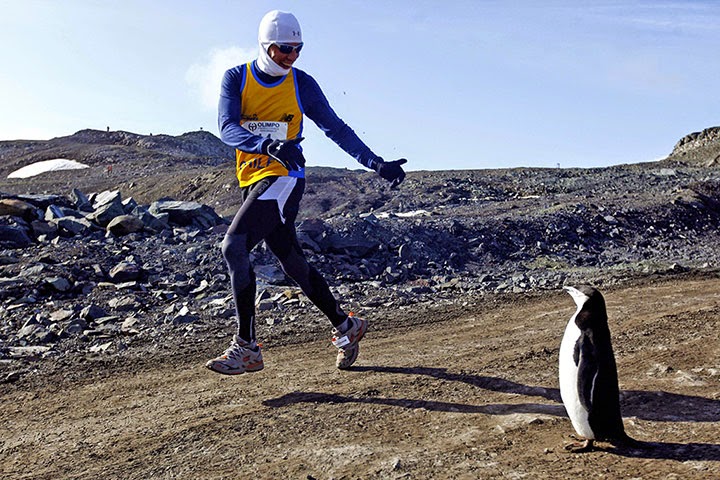
Runner from the Antarctic Marathon smiling at a penguin. Source: B Positive Project (2013)


Figure 6.


Figure 7.


Figure 8.
350 foreign officials attend an Annual Antarctic Treaty Conference in Uruguay in 2010. Main discussions included tourism, climate change and sovereignty. Source: Merco Press (2010)


Before I end this post, I'd like to recommend a couple of blogs and websites that have a good selection of photos that I would encourage my readers to take a look at. Firstly, Flickr's Antarctica page has a great range of pictures taken by tourist, and can be accessed by clicking here. Secondly, I came across a website called Wild Nature Images which has many photographs posted on their website, and can be accessed by clicking here

Wednesday, 31 December 2014

Waste Regulation

In my last post, I discussed how Antarctica suffers from contamination from research stations. This makes regulation an important strategy to try and limit the impact of these activities on the environment.

Montreal Protocol

The Montreal Protocol, as I have mentioned in this blog before, contains two annexes that relate to waste and pollution. These two annexes are Annex III, waste disposal and waste management, and IV, prevention of marine pollution. Under the annexes, countries that own, operate and manage research stations should endeavour to dispose of the waste produced with consideration to the environment.

Annex III states that sewage should not be disposed of in the sea ice or on the ice shelf. But, what I find disappointing about this Annex is that it allows sewage to be disposed of directly into the sea. This clause states that where large amounts of sewage are disposed of in the sea, it should be treated by breaking it down (maceration), (Secretariat of the Antarctic Treaty, accessed through Secretariat of the Antarctic Treaty, 2011). It seems counter-productive to allow sewage disposal into the sea, but not onto the sea ice or ice shelf given that there are just as many or perhaps more species living in the sea. Additionally, sewage is more susceptible to spread across the ocean if it is allowed to be dumped here. This shows that while measures are put in place to reduce human impact, there are not strong enough, limiting the effect of them.

Analysing Annex III further, I discovered that pesticides are banned from the ice and sea, however pesticides used and discarded for scientific purposes are allowed. This hardly shows commitment to protecting the environment. Additionally, as mentioned in my post Antarctic Treaty post, under the Antarctic Treaty, there should be freedom of scientific investigation. This further limits the extent that scientific research stations are obliged to follow the regulations. The regulations concerning waste and waste disposal should apply to every user of the Antarctic though. If there are exceptions, countries will use scientific research as an excuse to allow harmful chemicals into the Antarctic environment. Furthermore, if research requires the release pesticides in the first place, perhaps this research should be questioned because it is harming the environment at the same time.

Sewage treatment facilities

A positive aspect resulting from the Protocol, however, is that it is incentivising countries to implement treatment facilities to reduce waste. The Guardian (2014) interviewed a cook on the McMurdo station who reported that waste that must be shipped costs money to dispose of. This indicates that regulation is increasing the research station’s costs. To deal with this, treatment plants are being built as an alternative to shipping waste out. Sewage treatment facilities remove unpleasant matter from the waste and then chemically or physically disinfect what’s left over (Gröndahl et al. 2009). Subsequently, the treated water is released into the environment without harmful chemicals in it. The critical question here is, are the sewage treatment facilities effectively removing harmful substances from the waste?

The Rothera Research Station (see figure 1) continued to dump human and food waste into the sea until 2003 when it built a sewage treatment plant (Hughes, 2004). Liquid waste was sterilised with UV which was then released into the North Cove (ibid). Hughes discovered that this plant has been successful at reducing concentrations of faecal coliform (a type of bacteria) in Rothera. Figure 2a) shows the distribution of this bacteria in 1999 and 2b) shows the concentration in 2004. It is evident that the plant successfully reduced faecal coliform concentration.


Figure 1. Map showing Rothera Station on the Antarctic Peninsula (far left). 
Source: CIRES (2013)


Figure 2. a) concentration of faecal coliform in February 1999
b) concentration of faecal coliform in February 2004.
Successful reduction of faecal coliform in Rothera resulting from the release of treated water. Source: Hughes (2004)

This example shows how sewage treatment plants can reduce the effect of sewage waste on the Antarctic environment.

How many research stations are building sewage treatment plants?

There are over 100 permanent, summer and field stations in Antarctica (Polar Conservation Organisation, n/d). Gröndahl et al. (2009) investigated 71 stations, table 1 shows the results. The authors found that 41 permanent stations operate with sewage treatment plants. Although this represents more than half of those studied, it also signifies that perhaps there aren’t enough operating given the severity of the contamination occurring.

Table 1. The number of stations with sewage with sewage treatment plants out of a sample of 71. Source: Gröndahl et al. (2009)


Having said this, building a sewage treatment plant in Antarctica is particularly difficult. Climate, remoteness and wildlife disturbance are special considerations that have to be made when designing the plant and these factors contribute to the difficulty. Additional challenges are faced during operation of the plant. For example, if a spare part is required, getting replacements may take months due to remoteness. This means that contingency plans should be put into place, for instance, where is the sewage going to be stored in the mean time? Furthermore, because of the harsh climate, the plant must ensure that pipes don't freeze during operation (Connor, 2008). These factors mean that repairs or maintenance work is almost impossible to undertake, especially during the winter. Because of this, the treatment plants must be designed to require as little maintenance as possible. Difficulties like these can discourage countries from building sewage treatment facilities near their research stations. Therefore these problems can limit the uptake of treatment plants as an effective method to reduce waste discharge into the environment.

Moreover, despite Hughes’ successful results, it is important to bear in mind that not all sewage treatment plants have been successful. For instance, the Maitri plant experienced large reductions in the pH of wastewater and a large proportion of treated water was not biodegradable despite being treated (Ghosh et al. 1997). This was due to mechanical malfunctions. The purpose of treating water is to ensure that safer water is discarded into the Antarctic environment for the protection of marine life. If treatment plants are unable to produce safer water, then the plant is not worth having. This therefore highlights the importance of minimising operational problems and malfunctions. Although due to the problems mentioned above, this task is immensely difficult, showing that waste management remains one of the biggest challenges faced in Antarctica.

This post has shown that regulation can be effective if treatment plants are implemented, but the success of these are limited if they are not fully functioning. Moreover, The Montreal Protocol has obligations that must be followed when regarding waste and sewage disposal, although this is also successful to a limited extent due to exemptions given to scientific research. In my view, more stringent rules must be introduced if Antarctic marine life and nearby waters are to be restored to their natural state, i.e. that without human interference.

I have argued that it is possible for a sewage treatment plant to successfully treat sewage to release less harmful substances into Antarctic waters. This reduces the negative human impacts arising from research stations. Therefore, the future looks promising and because of this, the scores for negative human impacts verses positive/ natural impacts on Antarctica are 6-4.

Friday, 26 December 2014

The Usefulness of Research Stations

Research centres in Antarctica are widespread. Figure 1 shows just how many research centres, permanent or otherwise are present in Antarctica today. In fact, there are approximately 4,000 scientists and technicians living and working in the station during the summer and approximately 1,000 working there during the winter (Gröndahl et al. 2009). Because the research population is in the thousands, human impact on the environment will be significant given the sensitivity of the Antarctic environment. Furthermore, it can be argued that the Antarctic is becoming disturbed due to permanent human residency and man-made construction (ibid).


Figure 1. All the research stations in Antarctica. Adapted from Antarctic Glaciers (2013)

Setting up centres in Antarctica are supposedly justified by their work on measuring:
  • The ozone layer and patterns of change
  • Atmospheric chemistry
  • Global sea level changes
  • Information on climate change
…and much more.

Before I explain the impact of these centres directly on the Antarctic environment, I want to give you a few examples that demonstrate the value of research centres.

Vostok

Information on climate change is found by taking ice cores and using them to infer past climate as well as current climate. A Russian station called the Vostok research station was established in 1957. A reasonably famous study undertaken in 1999 by the Vostok station was the use of ice cores to reconstruct the climate in the past 420,000 years (Petit et al., 1999). Ice cores enable the reconstruction of past environments because trapped are in the ice indicate past atmospheric conditions, i.e. concentrations of carbon dioxide and methane. These help determine what climate was like. The results from Vostok are shown in figure 2.

Figure 2. Results from the Vostok ice core. Data shows the climate record for the past 420,000 years. Main finding: anthropogenic activity has increased the levels of methane and carbon dioxide. Source: Petit (2007) in Knight (ed) 'Glacier Science and Environmental Change', p. 404.


The findings from this research project were relevant because they showed that carbon dioxide and methane levels now surpass levels in any of the past 400,000 years. Thus, this research presented solid evidence for anthropogenic climate change.

Halley Bay 

Another major finding from research stations in Antarctica was the hole in the ozone layer, found from research undertaken at the Halley Bay (now known as just Halley) research station in 1985 (Farman et al., 1985).

As can be seen, research centres have made significant contributions to climate, climate change and atmospheric conditions. The research conducted is not only for the purpose of human benefit, recall the discovery of the hole in the ozone layer. This shows that Antarctica is benefiting from the research. 

Having said this, in making some of these important discoveries, sometimes the condition of the Antarctic environment has been compromised and this is what I will explain in my next post.

Tuesday, 23 December 2014

Pause for Thought

Since I started this blog three months ago, I have covered a wide range of topics. Given this and the enormity of this subject, I thought that this post should summarise the main findings so far.

Here is a summary of the key points and conclusions:
  • Different parts of Antarctica are being affected differently. It is easy to consider Antarctica as one unified system which is affected the same when things happen because the whole continent looks homogeneous. For example, “Larsen B has collapsed, quick! We have to find a way to stop the whole continent from melting!” In reality, ice sheets in Antarctica are complex to understand because they are affected by climate change, ocean circulations…etc. The Bipolar Sea-saw Pattern can help explain one part of the observed sea ice changes, however it is only a contributing factor out of many.
  • Tourism is a recent phenomenon and as tourist numbers continue to increase, and they will do in the future, animals are being affected in different ways. But the extent that they are affected differs between species. Tourism also has indirect impacts which are just as damaging to the environment, for example oil spills.
  • International organisations such as the UN try to create treaties to regulate Antarctica. I have analysed regulation in terms of tourism and found that there are flaws in them. In my view tougher restrictions are required if the environment is to remain unaltered by human actions. Furthermore, regulation can have negative and positive impacts on animals in Antarctica, for example, whaling bans, krill and penguins. It is unlikely that international organisations foresee these indirect food chain effects and this reduces the impact of regulation.
  • Krill are immensely important in the Antarctic food chain but fishing activities may be jeopardising them. However, it is difficult to understand whether krill populations are reacting to fishing or natural changes in sea ice extent caused by La Niña. Because of this, separating natural impacts and human impacts is more complex than it seems. 
  • Fishing is harmful for fur seals and other mammals because debris lost in the ocean creates entanglement.
  • Regulation seems to be the only way that humans are trying to make amends. It seems that banning happens less often.

My Thoughts

Furthermore, I would like to use this as an opportunity to evaluate what I have posted so far, giving my thoughts on what I think I have done well and not so well.
  • Diversity: I have tried to include a range of case studies throughout the blog to make it more interesting, drawing on different animals and explaining the different effects where ever I can. For instance, my discussions have drawn on fur seals, Adélie penguins, Gentoo penguins, krill, South Polar Skua…etc. I also want to point out that it has been an enjoyable experience learning about these wonderful animals!
  • Geographical dispersion: I have tried to include case studies from different parts of Antarctica to illustrate what’s happening everywhere. This has been supplemented with maps (see below). Antarctica is a large continent and different regions are affected by different activities. Having said this, I believe I have focussed on west side of Antarctica more than the east side. While writing and researching, I have discovered that there is little literature on the east side of Antarctica which is the main reason why. Perhaps this is because eastern Antarctica is less accessible than the west side so research tends to be focussed here.
  • Maps: I understand that naming Antarctic islands, ice sheets and seas could be confusing and hold little meaning if no one knows where they are. So where I can, I have places maps throughout the blog and highlighted where my case study locations are. Hopefully I haven’t created an overload, but I feel they are necessary!
  • Balance: I have given a balanced view of the impacts throughout the blog, presenting arguments for natural causes as well as human impacts.

Is it S.O.S Antarctica?

The name of my blog suggests that, because of the human impacts, Antarctica is sending a distress signal, asking humans to leave it alone! So far, I have been counting the negative and postive/ natural impacts and they currently stand at 5-3 to negative impacts. Perhaps the continent is in trouble... In my last post I will attempt to answer the above question based on my previous posts and the total score.

Finally I wish to explain what the next few topics are. In this final month or so, I aim to discuss:
  • The impact of research stations on Antarctica. Yes research has discovered ways to correct human impacts, but are there any negative impacts?
  • The Ozone layer. So far I have focussed on terrestrial and marine impacts, but what about the atmospheric impact?
Thank you for reading, until next week, I’ll end with this cartoon to prepare for the next post. 


Friday, 19 December 2014

Entanglement

So far, my blog has mentioned the impacts that humans are having on a number of Antarctic species such as krill and Gentoo and Adélie penguins. Today's post will look at yet another animal whose habitat is in Antarctica, the fur seal. Croxall et al. (1990) conducted research investigating how fur seals are becoming entangled by various man-made products that are roaming the oceans near Antarctica. Figure 1 shows what I mean by entanglement. It is when the fur seal gets caught up in man-made materials that are non-biodegradable, such as polypropylene or nylon string and fishing nets. Fur seals become entangled by putting their heading into the loops of material in the ocean while swimming. 


Antarctic fur seals are commonly found in the South Georgia and the South Sandwich Islands (see figure 2) and this is where Croxall et al. focus their study. The authors reported observations of fur seals that had man-made objects around the seals’ necks (referred to as neck collars) for 142 days at Bird Island (as shown in figure 2) from 1988 to 1989.


Figure 2: South Georgia and the South Sandwich Islands. Adapted from Cool Antarctica (2001) and Wikitravel (2011)

This study helped identify the extent of entanglement in South Georgia. Here is a summary of the main findings of the research:
  • At least 0.1% of the total Bird Island population had a neck collar during the study period, of which 59% was due to packaging bands made from polypropylene straps, 16% was due to nylon strings and 13% was due to fishing nets.
  • Males accounted for 71% of entanglements and young accounted for 88% of entanglements.
  • 135 males and 55 females were observed to be entangled.
  • 19% of the collars were loose enough to remove.

The table below, table 1, also shows the results.


Table 1. Observed Antarctic fur seals with entanglements at Bird Island and the type of collar. Source: Croxall et al. (1990)

There are some inadequacies in this research however. The authors claim that '15 were most probably of animals seen more than once or whose collars were subsequently removed’ (p. 223) so they did not count these in the results. Hence the total number of fur seal included in their results (i.e. the minimum number observed) is 208, not 223 (see table 1). I find this problematic because how can the authors be certain that a fur seal was observed more than once? The authors don’t mention that they were tagged or tracked in any way and due to the homogenous characteristics if fur seals, perhaps there is measurement error in the observations.  

Also, there are complications in measuring the exact proportion of the total population that is affected because the whole population is not observed. Many young don’t appear ashore and they could have neck collars. A further consideration is what about the fur seals that are entangled in the sea and don’t make it back to the island? Antarctic fur seals can go weeks in the oceans (National Geographic, 2014) so these seals are not observed. Hence, this sample is too small to infer the full extent of the total fur seal population affected by man-made debris.

Despite this, this research has shown that humans are involved in the entanglement of fur seals. Man-made debris is floating around in the waters surrounding Antarctica, causing danger to the Antarctic fur seal (see figure 1). Despite no permanent residents in Antarctica and despite its isolation from the rest of the world, man-made plastics, strings and ropes are still present in this environment. 

Where is it coming from?

The debris, i.e. nylon ropes, packaging plastic bands and rubber rings, comes mostly from fishing activities (Ivar do Sul et al. 2011). Other studies have found entangled seals in Signy Island, which is part of South Orkney Islands (Dunn and Waluda, 2008), and Marion Island, which is in the Southern Ocean (Hofmeyr et al. 2002). Both these studies concluded that entanglement is linked with fishing activities. The fishing industry is motivated by profit making which stems from the western capitalist society. The use of these materials is an efficient way to maximise catch and minimise costs, but fishing companies are less concerned about the effects of disposing ropes and nets into the sea.

Effects

Finally, what are the effects of entanglement? Although it might seem obvious, there are indirect impacts that surprised me. Below is a summary of the impacts of entanglement on fur seals (Hofmeyr et al., 2002 unless stated otherwise):
  • Individual suffering
  • Restriction of movement
  • Drowning
  • Strangulation
  • Infection (even if the plastic collar is removed, the open wound can cause infection)
  • Inability to protect itself from predators
  • Starvation due to reduced ability to catch prey
  • Female fur seals spend longer at sea than seals that are not entangled. This means they leave their pups unprotected for longer, making them more likely to die (Croxall et al. 1990)

Sum up

The idea that Antarctica would be excluded from human impact forever is deluded. Despite its isolation from the rest of the world, it seems that human impact is reaching a truly global scale. Antarctic oceans are being polluted by plastics and other man-made debris which is affecting Antarctic fur seals. What I want to demonstrate from this post is that man-made debris is inescapable wherever you go and Antarctic wildlife is bearing the brunt.

My next topic is scientific research. Are sites of scientific research doing more harm than good? One of the major concerns about research centres in Antarctica is waste disposal, so this topic follows on well from this post. The scores for negative human impacts verses positive/ natural impacts on Antarctica are 5-3.

Thanks for reading!